Share:

Showing posts with label photography instruction. Show all posts

Tuesday, December 3, 2013

Night Photography Instruction: workshops, events, and books

The following is a list of night photographers who offer workshops, events, instruction, books, and tutoring on night photography. Please contact the editor (Royce Bair - at my email address) if you have information for this list:

Mike Pach
    Website • Email • Telephone: 719-260-6637
    Paint Mines Night Photography Workshops near Calhan, Colorado
    
Paint Mines Interpretive Park

Robert Arn
    WebsiteContact
    eBook: Photography At Night: An Introduction To Astrophotography on a Budget
    PDF Downloads: Free Tutorials and Presentations

From "Inexpensive Astrophotography for the Beginner" ~ a free tutorial by © Robert Arn

Royce Bair (Editor of this blog)
    WebsiteEmail • Telephone: 801-558-2701
    Workshops & free events: NightScape Photography meetup schedule

Royce's "NightScapes" Video demo ~ © Royce Bair

Alister Benn
    Website (on Google+)
    eBook: "Seeing the Unseen" - How to Photograph Landscapes at Night

"Solid Air" (used on his eBook cover, "Seeing the Unseen") ~ © Alister Benn

Mike Berenson
    WebsiteEmail • Telephone: 888-460-8880
    Night Photography Workshops: Colorado, Utah, & Arizona
    Night Photography Blog: "How To" Articles & Tutorials, Product Reviews & more

Lake Irene's Milky Way Mirror

Brad Goldpaint
    WebsiteContact
    Workshops: 2013 schedule for on location workshops
    Private Workshops and small groups
    Online Workshops via Google+ video chat

"Allure of Worlds" ~ © Brad Goldpaint

Phil Hart
    eBook REVIEW: "Shooting Stars" - How to Photograph the Stars & the moon


David Kingham
    WebsiteContact • Telephone: 970-372-0752
    Workshops: 2013 schedule for on location workshops
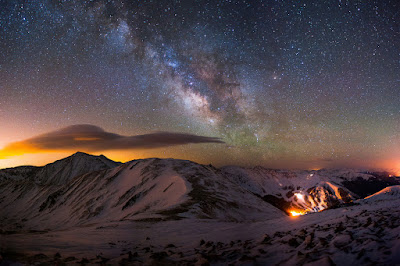
"Cupid Mountain Milky Way" ~ © David Kingham

Dave Morrow
    Website
    Online Tutorial: Star Photography Basics (Free)
    Video Tutorials: Star Photography Post Processing
    Lightroom Presets: Under the Stars Lightroom 4 Presets

"Shoot Me to the Stars" ~ Mt. Rainier from Sunrise Point ~ © Dave Morrow

- - -


Wednesday, November 20, 2013

Testimonials for Royce Bair's Workshops

Unsolicited testimonials about my workshops are a treasure. It is hard to place a value on goodwill like this, but I truly appreciate my association with each photographer and their thoughtful comments! The follow comments are listed below in no particular order:

Simply amazing! Thank you so much, Royce--the workshop was absolutely fantastic. I learned so much and came away with some incredible photos. I appreciated your patience and energy as well as your generosity in sharing your knowledge with us. And yes, what an excellent group of people! I couldn't have asked for better companions for this adventure. I had so much dang FUN it's ridiculous. I appreciated how willing everyone was to help each other--I learned quite a bit from each of you as well, so thank you. And keep in touch please! — Nicole Fernley

This was my third workshop with Royce Bair. I learn more each trip from his knowledge and mentoring - he is a master of Night Sky Photography. The experience was terrific and the I really enjoyed the group. I look forward to the next workshop with Royce! — George Manlove

© George Manlove • Canon 6D • Canon 16-35mm f/2.8 @ 33mm • f/2.8, 15 sec, ISO 800 (click to enlarge)
It was an informative and fun workshop. We had a wonderful group and I learned so much. — Denise Waterman

Milky Way over John Moulton Barn, Mormon Row, GTNP ~ © Denise Waterman
Nikon D600, Rokinon 24mm • f/1.4 • 15 seconds • ISO 6400 (click to enlarge)
Excellent workshop! Received way more than I expected. Thank you so much for the wonderful workshop in the Tetons. I learned everything I hoped for and more! Your instruction in the field was right on and your post-processing savvy brings the raw images to life exquisitely.  I enjoyed photographing the sights from vantage points only someone intimately familiar with the area could have shown me, saw the stars and Milky Way like I have never seen them before and shared it all with some entertaining and talented folks that made up our little group. — Steve Slinger

Fun, informative, and we had great luck with the weather overall. — David Hoelscher

Royce’s Zion National Park Milky Way Workshop was my first exposure to the art and science of astrophotography. I was thoroughly impressed with Royce’s classroom post-production lecture and hands-on field photography workshop. He revealed a lot of tips and techniques that make for stunning nighttime photography. Every aspect of trip was handled with professionalism—from pre-workshop communications that included useful eBooks on astrophotography to detailed trip itinerary, in-class and in-field instruction to post-trip follow up. Our May Zion participants made for a fun and compatible group. Thanks, Royce for making this workshop so much fun and a great educational experience! I look forward to participating in another workshop in the near future.
— Christopher Wray


"Watchman under the Milky Way" - Zion Canyon, Zion N.P. ~ © Christopher Wray (click to enlarge)
Awesome! Wunnerful, wunnerful, wunnerful! Thanks, Royce and all the other photographers, I had a great time! — Steven Sharp

I am a naturalist. I chose to work with you to find out for myself to see if the sky and milkyway could be captured w/o photoshop. many of my fellow photos tried t tell me it was all done in photoshop. I am happy to prove them wrong. Royce you are one intelligent photographer. Hats off to you! — Rita Nielsen

Excellent! — Brian Drake

The Best! Royce is an excellent instructor. He is very thorough, yet makes the technical details easy to understand. He covers each of the camera settings and why they are important. Reviews astronomical information, so you know where and what to look for so you will know when you are on your own. He covers information that is important as the night progresses. He was there visiting with each person to make sure they understood the instructions and were getting good pictures. Then he follows up the class with additional information and resources. If you are thinking about taking one of his classes - do it! Opportunities to learn from such a master are rare. — Doug Lawrence

Thank you, Royce! An incredible experience! I learned so much and look forward to doing additional workshops in the future. — Jerry Holman


Milky Way over Delicate Arch, Arches National Park ~ © Jerry Holman
The was such a great workshop!! Royce is very helpful and explains details in an understandable way. Can't wait to take another workshop! — Pat Wimpee

This was a fabulous experience. Very well planned for the spots to take photos at the right times, excellent teaching and a great time. I am more amazed at the expert skill Royce demonstrated in putting together an excellent group of attendees who were all wonderful - even the Cannot users were great people who provided valuable information. We need to have a reunion shoot together when our post-processing skills create signature images. — Steve Waterman


Milky Way stars over "The Mask" at Bryce Canyon National Park ~ © Steve Waterman
The work shop was beyond belief-- the information imparted was so much I am not sure I took it all in--the group company was absolutely enjoyable,fun and helpful--would love to photograph with any of you again--hope our lives cross in the future--Royce, I cannot say Thank You enough. I enjoyed you personally and as a teacher--your energy level was outstanding. Hope to do another workshop in the future. — Sara A. Smith

Royce did a wonderful and professional job! He was very knowledgeable and more than willing to share his expertise and time answering questions and working with any individual on their particular questions/concerns. I really enjoyed all the other workshop participants - great bunch of fellow photographers who were very talented in their own photographic skills. I am pleased to announce that the rash I developed from standing too close to the Nikon (Nylon) shooters is almost cleared up. The Dr. said it was pixelated skin or noise from high ISO Nikon deficits.  — C.Y. Roby

Hope I can make another one soon. Still amazed at how you were able to get us around to the best spots and just the right time. — Jean Thomas

Excellent, Royce, thank you so much! — A.M. Ruttle

Royce, it was a fabulous time, I learned lots and enjoyed everyone's company. Despite being sleep deprived, everyone was great and wonderful company. — Joyce Harman

I learned a lot and am excited to go use what I've learned. — Alex Greenfield

Thanks, Royce. I thought that this was a great workshop and was an excellent value. Learned lots, got some great shots, met some neat people...what else could I ask for? — Paul Titus

Thanks for putting on such a great workshop and adapting to the weather conditions. Looking forward to doing it again in Zion. — Benjamin Johnson

Just wanted to thank you again for the outstanding workshop!  I am going back and re-editing some of my older photos with some of your suggestions and it is making a big difference.  I have learned so much from you and greatly appreciate your willingness to share your knowledge. — Mike Darter


Milky Way over Alabama Hills pinnacles ~ © J. Michael Darter (click to see video)
Thanks Royce. Your personal attention and great knowledge added immensely to the success of this workshop. I had never been to Zion before, seeing it and photographing it under your guidance was an awe inspiring experience. Hope I'm able to do another meet-up workshop with you in the near future. I'm recommending your workshops to every serious photographer I know. — Larry Goldman

I learned a lot. The experience was great. — Stan Kaules

Thanks for the fun and educational workshop! Royce, your knowledge, experience, planning and intellect made this trip very fruitful in my quest to be a better photographer. — Robin Perkins


Milky Way over Zion National Park's most famous lone pine tree ~ © Robin Perkins
Canon 5D Mk III • Rokinon 14mm f/2.8 lens • f/2.8, 30 sec, ISO 6400
The workshop was excellent. I had a blast. Thank you for your excellent teaching and guidance. I am very satisfied with my images and I am looking forward to the next workshop at the Grand Tetons. Thanks again. — Iqbal Mohamed

The workshop exceeded my expectations. Night shooting was of course super, but I also learned other things about photography as well. — Michael Braunstein

Royce's 2014 Workshop, Lecture & Video Conference Schedule: NightScapeEvents.com
Featured Post: Shooting Stars eBook Review — How to Photograph the Stars and the Moon

Wednesday, May 29, 2013

NightScape Photo Recipe

Milky Way over String Lake, Grand Teton NP. Canon 5DM2 • 15mm f/2.8 Fisheye • 30" @ f/2.8 • ISO 6400 ~ © Royce Bair

I am constantly asked to supply a simplified, step-by-step list of "ingredients" necessary to create my style of astro-landscapes (NightScapes), so here goes:

Your best photos of the Milky Way are taken without the moon present, and between 2 hours after sunset and 2 hours before sunrise.
1. Set your camera on a tripod.
2. If you have a remote release, use it. Otherwise, you can use your self-timer to set off the shutter (set it for the 2 seconds delay instead of the normal 10 seconds).
3. Turn your lens to manual focus, or shut auto focus off (otherwise the camera goes crazy trying to focus in the dark).
4. Set your focus manually to infinity. Check the accuracy by auto focusing on an infinity subject in the daytime, marking the position on the lens barrel, and returning the lens to manual focus (you can tape the position down as a precaution). You can also use your camera's "live view" function to manually focus at night on the brightest stars (enlarge the image on the LCD monitor for accuracy). Note: your camera has a one to two seconds video feedback delay (depending on the brand and model), so fine-tune the focus slowly.
5. Set your camera mode to manual (usually "M" on most cameras).
6. Select the highest ISO you have (but no higher than 6400).
7. If you have a prime wide-angle lens with a fast aperture, use it. Otherwise, zoom to the widest angle of view.
8. Set your shutter speed to 30 seconds. This is the longest exposure most cameras will give you without going to "B" for "bulb" ("B" does require a remote release).
9. Set your lens aperture ("F" stop) to the widest aperture (smallest number), which is usually f/3.5 (f/2.8 is better, but f/4 is acceptable). Here are good starting point combinations:
          f/2.8 - 30" - ISO 6400
          f/2.0 - 30" - ISO 3200
          f/1.4 - 30" - ISO 1600
          f/3.5 - 30" - ISO 6400 (-0.5 EV)*
          f/4.0 - 30" - ISO 6400 (-1.0 EV)*
          f/3.5 - 30" - ISO 3200 (-1.5 EV)*
          f/3.5 - 30" - ISO 1600 (-2.5 EV)*
*These underexposures are not optimum, but are usable by compensating in post production.
10. Set your White Balance (WB) to Tungsten or Incandescent (on most cameras this is the symbol of a light bulb, also called "indoor"). If you prefer a numeric Kelvin setting, use 3500K, 3200K or 3000K (the lower numbers will give your sky a cooler or bluer color). My favorite numeric Kelvin setting is 4000K. I believe this produces a more natural sky that is still cool, but not quite as blue. This also works well when mixed with 3200K light painted foregrounds. Some people prefer an Auto or Average (AWB) white balance setting if they have a lot of post processing experience. Auto or Average will give you a dark gray colored sky (you can change this to a more colorful sky in post production using Photoshop, Adobe Elements, or Lightroom).
11. Frame the Milky Way or several interesting star constellations, (try to silhouette an interesting foreground subject) and take your shot. Light painting the foreground can add even more interest to the composition.
12. Composing in the dark can be difficult. If you have an ISO higher than 6400, use it to shorten your exposure times so you can review your composition on the LCD monitor much quicker. Be sure to return to the lower ISOs (6400 or lower) for your final exposures.
13. Fine tuning your exposure: The more light pollution (from artificial lights or the moon), the more you can reduce your exposure by lowering the ISO (one stop or more).
14. Fine tuning your image: You'll notice that 30-second exposures will have some star trailing (blurring) when the images are enlarged, unless you are using an ultra-wide angle lens (i.e. 114ยบ or wider). You can eliminate this slight blurring by reducing your exposure time to 15 seconds (and compensate with wider apertures or higher ISOs). This technique is a simplified version of the "600" or "450" rule.
For hands-on instruction, visit my workshop page on Meetup.com.

Featured Post: Shooting Stars eBook Review — How to Photograph the Stars and the Moon

Saturday, January 12, 2013

Best Time to Photograph the Starry Night Sky

The Starry Night Photo Window: 2 hours after sunset & 2 hours before sunrise (click for larger view)
The best starry night skies are found two hours after sunset and two hours before sunrise. Photograph anytime before or after this window, and there is enough twilight to compete with starlight.

Fudging even 15 to 30 minutes outside this window can greatly lower the quality of your star photography. That's because daylight is 40 million times brighter than starlight, and even a little left over in the twilight sky can be overpowering to all but the brightest stars! Although this twilight may be imperceptible to the eye, it will lower the contrast of your night sky and dim the weaker stars, as in the example below. In this photo, the sun set on the right side, 1.5 hours ago, and a crescent moon is just now setting on the left side —but it is the leftover twilight from the sun that is competing the most with the stars:

Moonset over Teton Range & Jackson Lake — 1.5 hours after sunset ~ © Royce Bair


Only the brightest stars are able to compete with this twilight sky and the setting moon. Very little of the Milky Way, on the left side, is distinguishable. Although this is a beautiful photo, these are not optimum conditions for the most brilliant starry sky photos.

Milky Way over Teton Range & Jackson Lake — 2 hours after sunset / no moon ~ © Royce Bair
Sunrise and Sunset Times: There are many website and applications available to find these times for any given location, but one of the most convenient and reliable is one from the U.S. Naval Observatory website. With this site, you can enter a location and obtain a table of sunrise and sunset times for the whole year of your choosing.

Other competition for darkness: Moonlight should also be avoided, since it is at least 135 times brighter than starlight. Even a thin, crescent moon is five times brighter than starlight! Man-made light pollution should also be avoided where possible. (Both of these competitors will be discussed in greater detail through other posts.)

Royce Bair is the editor of this blog and the photographer of the above images. Here is my gallery of NightScape images. My schedule of workshops, tutorials, and other events is available here.

Advertisement: Hot Weekly Photography Deals - Amazing discounts (updated twice a week).